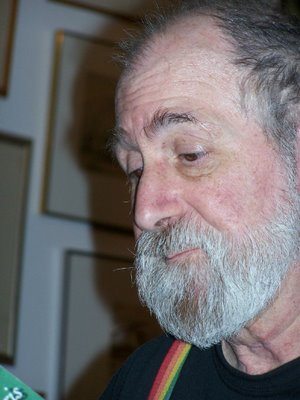
Marc D. Goldfinger

Let’s Re-Imagine America


If Barack Obama stood up this election year and said, “I will not take any Wall Street money,” he could possibly win the election by a landslide. That’s just a conjecture. One of the wonderful elements about the Occupy Movement is that everyone is a leader.

Right now, close to 50 million people in the U.S. are in poverty or right on the edge of it. Democracy is hanging by a thread and those in power are gutting the Constitution because the House and Senate are listening to the big money people.

The so-called Patriot Act is stronger than ever. Even United States citizens can be disappeared. All the elements to create a fascist police state are in place. Remember, in a democracy, the one thing we have left is one-person, one vote. And all over our country different states are trying to make it more difficult for people to vote while corporations are declared to have the same rights as individual people.

Who has more money—an individual person or a corporation? Well, that’s a no-brainer—of course a corporation has more money. A corporation is a conglomerate of greed-driven individuals that want to keep their riches and will do anything to make that possible.

Predatory capitalism has been happening across the board for over the last 30 years and has been growing at a phenomenal rate while 17 million American households are now “food insecure.”

When a person comes in to get Food Stamps, he/she is faced with a mass of paperwork—13 to 15 pages to fill out—while their stomach is growling and their children are crying for lack of food. Why is it that we can’t help the poor but always have more money for weaponry?

When people start to slip into poverty, there should be a ladder and someone leaning over to help them up that ladder—but instead—when people start to slip—there is a greased chute and piggy hands shoving them down.

Did you ever wonder why employers now check credit records of prospective employees? If they find their credit records are poor, they won’t hire them. How absurd! People are willing to work but because they NEED money, they can’t get the job! What’s wrong with that system?

There is not a war on poverty—there is a war on the poor! When you start to fall, the system kicks you lower. In 1968 the minimum wage kept a person/family 30 percent above the poverty level. In 2012, to have the minimum wage equal the buying power of the past, it would have to be over $15 an hour—and it’s not even close.

You know, when I was in that voting booth in 2008, and I saw Barack Obama’s name there I cried with joy as I filled in that black oval. I had hope for the first time in over eight years after I watched helplessly as George W. Bush thrust us into two wars our country could not afford.

He and his Congress were spending money destroying other countries while America was falling apart. And when the great financial collapse and mortgage fiasco hit in 2008, no one gave money to the poor—they gave money to the rich. Of course, why should the people who really need the money get fed; the giant corporations had their mouths open for more even as their stomachs were fat with gathered riches?

The government put the poor up for sale. If we don’t rise up and complain vigorously, we will be sold down the river. Which is exactly what is happening in today’s American empire. Corporate America is sitting on $2 trillion of cash; they are recording record profits at our expense, while the people of America hunger for a decent meal and a place to live.

Look at it this way. If a town in North Dakota was freezing and the oil company in the town was sitting on billions of gallons of oil waiting for prices to go up while people froze to death, what do you think would happen? Why, the people of that town would rise up and take that oil so their families could stay alive.

That’s the position of the United States of America right now. Just look at what happened in New Orleans when Hurricane Katrina hit and people were shunted off and filled the Mississippi Coliseum. Mostly people of color by the way. No water, no food, no medical supplies for days, when W. Bush’s America could have been flying in all those necessary supplies.

But the truth of the situation is that the Abyss of American Slavery still exists in the minds and hearts of much of white America. Those people of color in the stadium were expendable in the eyes of our corporate plutocracy. Why save the poor when the rich can just vacation in hot spots all over the world?

The poor in this country are more than bought and sold. They are sold out! The younger you are in America, the more likely you will be living in poverty in the future if the current greedy-corporate-driven trend continues.

It doesn’t have to stay like this. One person, one vote. Occupy America. It is our duty to rise up and take our country, the United States of Amerika, back from the fat corporate pigs and financiers that control it.

I have hope but I am not optimistic. When I filled in that ballot for Barack Obama, I believed in his Audacity of Hope. Right now he is a mediocre president who has done some good things but not enough. Obama is just a whole lot better than Bush, who threw America down the shit-chute in just eight years.

But will he stand up to the corporate fat cats that feed at the same trough as the House and the Senate? It’s no accident that ¾ of our Congress are millionaires or better. It’s no accident that today’s Supreme Court is giving away our rights, one by one.

It’s no accident that student loans are getting more and more difficult to pay back. Student loans are immune to the recovery of bankruptcy—they just don’t go away and keep gathering interest—and how can you make payments if you can’t get a job?

Why aren’t the preachers in the churches talking about the poor rising up and taking their country back? Jesus said, “The poor will always be with us,” but he didn’t say they had to stay that way!

Occupy Wall Street isn’t over. Right now it is just planning, waiting for spring. Like the buds and the flowers and the leaves on the trees, Occupy will bloom all over the country and say, “It is time! We have had enough!”

It looks as if Mitt Romney will be running against Barack Obama. Mitt Romney—that corporate greed-driven raider who even swears that his dog likes riding on top of the family car with a 70 mile an hour wind blasting in its face. He tells us in his own words, “I like to fire people!”

Romney means it. He wants to fire the people of the United States and make us all slaves no matter what our creed or color is. It is amazing that a carpetbagger like Romney has risen so high in our political structure. No, maybe not.

But it is time to wake the sleeping giant, the American people, and make them aware that the lobbyists who throw gifts at Congress are ripping them off. Folks, let us say, “No More.” Let us rise up this spring and Occupy our country and free it from the chains of oppression.

And then, when we take our country back, we can all join hands and sing together, like Dr. Martin Luther King, “Free at last, free at last, thank God Almighty, we are free at last.”
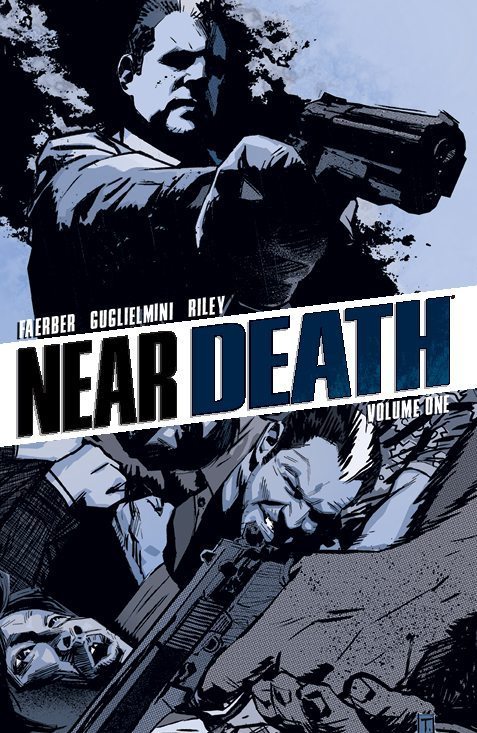
Near Death | Well Jay & Simone & Team

Well Jay & Simone & Team

Great read. I picked up Near Death as an extra and now I’ll have to put it on my regular pull list at my shop Comicazi in Somerville MA. This is as good as Criminal by Brubaker; I’m sure you’ve seen it. Even the art is comparable. If you keep going like this, you have a killer on your hands, if you know what I mean. I understand the art being placed in Seattle, just as Stumptown was placed in Portland, Oregon.

I recognize both places; I lived in Portland while I was a fugitive for two years; finally got caught and rendited back to Massachusetts after a 3 month legal battle. But I miss Portland. The West Coast gets in your blood but I’m settled now and write for a small newspaper called Spare Change News that helps people in dire straits get back on their feet.

I started with them when I was a homeless junkie and now I’m clean, happily married and comics have replaced heroin as my addiction. Just ask my wife. Your portrayal of the underworld is realistic and the story in Near Death just pulls the reader along. I did a poetry reading while I was serving time and the tier was going crazy and all of a sudden I realized that I was pulling everyone towards a riot. They were chanting, “Goldfinger, Goldfinger, Goldfinger.” So I pulled back and started reading love poems. Slowly the mood died down. After it was over one of the guards thanked me for slowing it down. When I got back up on the tier one of the hard cases said, “Why did you take it down. You had ’em. We coulda ripped out!”


Well, the last thing I wanted to be in the middle of was a prison riot. Especially when the finger pointed to me as the instigator.

In prison some of us grow up; some of us get harder. In Near Death Markham, your “hero” has had a life-changing experience. He’s still in the game but in a more dangerous sort of way. I’m looking forward to your continuing tale. You guys are the balls!

By the way, if you haven’t checked it out yet, a good show on TV is called Breaking Bad. It’s well-done with good character development and suspense. It’s realistic too. I know. I came out of that world alive. — Marc D. Goldfinger

A Tale of Two Bullets


A few weeks ago, late in November, I sent a postcard to Deval Patrick asking for clemency for Arnold King. Mr. King is currently serving a life sentence for the murder of a Boston political aide in 1971. At this time, for the first time, the entire Parole Board was in favor of the commutation of King’s sentence. He had come up for parole hearings many times before and this was the first time that it was a unanimous decision.

Since Arnold King has been incarcerated he has earned undergraduate and master’s degrees, worked with incoming inmates as a counselor, and was extremely effective as a peer counselor. There are many ex-cons who have been helped by King’s work. They have completely changed their behaviors upon being released and attribute their success as societal citizens to the help they received from Arnold King. I have met a few of them and this impressed me enough to attend a workshop about King’s deeds while incarcerated.

I pondered the matter deeply before sending the card to Governor Deval Patrick. It is no simple matter to predict the behavior of a person when they are released from prison, especially after so many years on the inside. I felt, in my heart, that Arnold King would be an asset to our society on the outside and that is why I sent the postcard asking the Governor for clemency.

Governor Patrick, after much thought, declined to free Arnold King. This is the first commutation petition to come before Governor Patrick and he, in his decision, said, amongst other things, that, “while his (King) disciplinary record has improved over time, it has been far from exemplary.” He also said that he didn’t believe the petition should be granted, “at this time.” This does leave hope for the future.

I am one of the privileged people who receive e-mails from Arnold King and his friends, and I have also read some of his columns in Whats Up magazine, which now is a part of the Spare Change News. I was hoping that Arnold King would be pardoned.

However, I am not naive. I am an ex-con myself. Though I have been non-violent for most of my life, there was a period when I was young that I was far from non-violent and I also carried a small pistol.

Funny that I called it a small pistol. Sometimes my writing shows the error in my thought-train. Believe me when I tell you that the gun I carried was totally capable of killing another person. As a matter of fact, the only game usually killed by pistols are humans.

In 1967, I was arrested for sale of marijuana. Three joints for 50 cents. But it was still severe enough at that time to be held in Newark Street Jail for 9 days because my bail was $5000. My parents had a court hearing with a lawyer and my bail was reduced to $2500. They paid my bail and I was freed.

It was too late to save my job as a shipping clerk in a factory. I was bitter and not exactly an angel, at least not an angel of heaven at the time. The day I was fired from my job, which was the morning after court, I went with some friends into New York City to buy some heroin. In for a dime, in for a dollar. I had my snub-nose double-shot .38 in my pocket.

We had some trouble copping and the dope was not as strong as I liked. That was often the case. My temper was hot and I was bitching as I drove the car. We stopped at a traffic light and there was a police officer standing on the corner near us with his back to us.

I pulled out the pistol, pointed it at the center of his back, and said, “I’m going to kill that pig right now.”

My friends freaked out and said, “Marc, Marc, what the fuck are you doing? You’re going to get us all killed.”

I had my finger on the trigger and somehow, through my rage, I heard their voices. I lowered the gun and put it on the seat. I still remember my hand was shaking. I really wanted to do it but the stupidity and recklessness of the act was seeping into my addled brain.

Then I made a fateful decision, one that I have never regretted. I handed the gun to my friend. The magnitude of what I had been about to do hit me like an earthquake.

My friend said, “What do you want me to do with this?”, as he pointed at the gun. I told him I had just had my right to carry a firearm taken away. As crazy as I was, even in the depths of my addiction, I realized the impact of what I had almost done. In that moment, if I had pulled the trigger, not only might I have killed another human being (even though at that time I didn’t think cops were human), but the effect of the act would have reverberated through my life and the lives of everyone in the car and the lives of everyone who was family and friend to the police officer who was my target.

If I fired the gun, I would never have been able to take the bullet back. It is like being in a relationship with someone and saying something to them that strikes at the deepest part of their being. Afterwards, you can apologize, but the words are out there and can never be taken back. Irrevocable.

In a way, I am a parallel of Arnold King, the only difference being that I didn’t fire the gun. I’ve done time, only a few years, for drug crimes I’ve committed but if I were caught for every drug crime I committed, I’d probably be in prison for the rest of my life.

However, a miracle has occurred and I now am a committed servant of society and I am pleased to be just that, a worker among workers, a drug counselor and a poet who does other types of writing to get paid.

What does this have to do with Arnold King? Well, I am similar to Mr. King, in that I do work to atone for my sins because I am driven to do so by my heart. It may very well be that Mr. King is the better man because he has accomplished so much with the odds against him. I don’t even have a bachelor’s degree.

The only difference between Arnold King and myself is, in my case, the bullet didn’t leave the gun. I didn’t pull the trigger. I believe that was God’s work, not mine.

The fact is, in an e-mail I received from Arnold King’s supporters, it said that he was okay and was going to continue his work. I am sure he is disappointed. It is only human to be so. At one point in my life, while in prison, I tried to have my sentence reduced. The judge decided against me. I was torn, my heart ached; I went back to prison from court. I recovered. I was the prison librarian but I also mopped the floors in the offices and cleaned the toilets.

Will Arnold King ever be released? That is a question I cannot answer. I sent the postcard to the Governor. I felt that he should be released. I know that people change and he is not the same man that, one night on the Boston streets, put a gun in the face of a man and pulled the trigger.

It may very well be that the work Arnold King does will continue behind the walls. I believe he does this work because it is in his heart to do so and this setback, this refusal of clemency, will not change his continuing good works.

In my heart, I hope that one day he can do this work on the outside. I really do. But the one thing he cannot do, the one thing that is beyond the power of anyone to do, is to put the bullet back in the gun. For that, for John Labanara, the man who was shot, and his family, it is too late. The best they can do, all of them, including Arnold King, is to pray for forgiveness. And wait.

Heroin Addiction: An Illness


A chill ran through my body as I read of the murder of Barbara Coyne of Boston, 67 years old, allegedly by a young heroin addict known as Timothy Kostka, only 27 years old. Violence always did make me ill, especially violence that was irrational and had no valid purpose.

I remembered the picture in the Boston Globe, Timothy leaning over in conference with his lawyer, and I looked closely at his face. Here was a man who was cursed with the same affliction as myself, a craving for heroin, driven by a demonic yearning that brings out the worst in a human being.

I think of my lost years, over 3 decades of chasing the drug, being imprisoned within myself, the police always on my trail because of my desperate craving just to kill the feelings of despair that ate at my soul. I thank Gods I do not understand that violence was not a part of my life.

So many opiate addicts, so many, scattered throughout the world, just chasing release from themselves. When I read of the horrid murder I felt a deep sorrow, not only for Barbara Coyne, who died needlessly, but for all the heroin addicts without any violence in their spirits, who would suffer for the terrible act of one man, prone to violence, and the knee-jerk reaction that would take place in the community.

Hunted, like vampires in a nightmare fantasy, all those heroin addicts whose only crime consists of the search for relief from their tortured realities. Why do some of us become addicts, or alcoholics, which is addiction by another name? What causes this illness, nature or nurture, or is it both?

In my younger days I saw people try the opiates and then discard them, but myself, I was gripped by a raging need for the extreme liberation of the pain of myself and only the opiates would grant that state of being. Those of us who had a tendency towards violence were few. Addiction aggravates the worst in us—if a tendency towards violence exists in our spirits, it will be brought forth in our desperate search for relief.

However, if we were not prone to violence, the need for opiates would not create it. The true horror of this situation is that the cries for the new Prohibition will be louder and more exaggerated than ever.

According to the Boston Globe, police officers will be knocking on the doors of suspected dealers warning them that they are being watched. People are demanding to know why small-time street drug offenders receive small sentences and are quickly back out on the streets.

According to the Globe, U. S. Representative Stephen Lynch “acknowledges that the scourge of drugs is behind the killing of Ms. Coyne.” A community meeting was held in South Boston to chatter about the “curse of addiction.”

A curse it is, but let us have some compassion for those stricken with the disease of addiction, 95% of them just petty criminals, either shoplifting, dealing, or begging to support their habits. Not only am I a person afflicted with the illness of heroin addiction but I am also a counselor for people like myself. I have worked in various agencies that help people who are sick with the disease of addiction—the Cambridge Needle Exchange being one of the places I worked.

At no time was I frightened by the behavior of the people I treated; on the contrary, I was filled with sadness that our civilization has not come to grips with a sickness but chooses to criminalize it. Early this April, I read an article in the Cambridge Chronicle that was entitled “Drugs—Police: Heroin Ring Infiltrated.”

The article talked about hauling in 10 suspects and making numerous arrests, with a list of all the nefarious characters—most of them homeless or couch-surfing—the biggest arrest was a 41 year-old man who was caught with 21 bags—the size of postage stamps—who was living in a boarding house run by the non-profit organization called CASCAP. Ironically, CASCAP formerly ran a small hospital for the treatment of addiction and it was closed due to budget cuts.

Not for one minute will this action make the drugs go away. Small crimes receive small sentences—paid for by tax dollars, more expensive than keeping addicts in treatment centers where they would be better served. When treating the illness of addiction, one must realize that just by keeping someone in the hospital until the physical aspects of the disease are relieved, but then releasing them back into the world with their psychological and spiritual aspects untreated, we just create a revolving door situation.

Addicts just don’t get better because they go into treatment for two weeks or less or because someone tells them they are sick. First of all, part of this powerful illness is seated in the mind of the addict and it actually tells them they are okay—despite all evidence to the contrary. Imagine—an illness that tells lies—but that is exactly what we are dealing with here.

Families torn apart by untreated addiction—youngsters who find it easier to get opiates than marijuana—opiates are now considered to be an entry-level drug. Many people start out by having one of their friends give them some oxy-contin that they took from their parents medicine chest or dresser drawer—and some go on to be hooked and some don’t succumb. Why? If we knew that answer the disease might not exist.

Treatment for the disease, however, does exist. Prison is not the answer. Modern medicine has come up with some wonder drugs for opiate addiction but they need to be made available along with continuous therapy and a complete safety net consisting of support groups—and both therapy and support groups are there.

The miracle drug is called Suboxone. When people use opiates for a lengthy period of time the pleasure receptors of the body atrophy and die. This period of time varies from person to person—but if someone has used for 1 to 5 years or more—atrophy may have already taken place in the receptors.

I was addicted to heroin and other opiates for over 30 years, making many attempts to overcome the horrors of my illness, being treated short term and then released and using, to my dismay, even against my own unguarded will. After many treatments, I found that I could stay abstinent for long periods of time—a few years sometimes—but then the impulse would come and I would pick-up the drug and once the fire was re-lit, it consumed me.

I got clean or abstinent, if you will, and started to rebuild my shattered life, and then I needed knee surgery. Immediately upon narcotics being introduced to my system, it was as if I had never stopped—but I had the knowledge that I was ill this time. Victims of this illness heal in increments and that was what was happening to me.

But there was one missing component. That component was Suboxone, a mixture of Buprenorphine and Naloxone, one drug to fool the atrophied pleasure centers into thinking that it had opiates in it, and the second, the Naloxone, a blocker that would activate if the drug was administered improperly. This drug does not get one high but it is the ingredient that makes impulse using impossible.

Picture the cell in the body that reacts with heroin as a room that bids heroin welcome. When one takes Suboxone, the room is filled to the brim leaving no room for heroin to enter the cell. So even if the addict, like myself, takes heroin—nothing will happen. This drug blocks the affect and fools the body into thinking, as it were, that all is well.

And indeed, with Suboxone, all is well. It must be taken daily, under the tongue, or as they say in medical jargon, sublingually. Of course, the psychological and mental aspects of the illness should be treated too—with the help of a knowledgeable therapist and the psycho-pharmacologist who is specially trained to prescribe the drug—and include support groups.

This is a whole lot cheaper than having a giant prison system and highly paid police chasing after the 95% of the harmless street addicts. It makes more sense too. I know, for a fact, because with all these elements my entire life has turned a complete 180.

So, if a society wants to focus on eradicating drug addiction, well, the truth is—it can’t be done. However, drug addiction can be treated—with a much better result than what our society has done with alcohol addiction. Prohibition is Prohibition. We have reached a breaking point with drugs like the one we reached with alcohol in the years of Prohibition. Our streets are flooded with drugs. Dealers fight for turf with weapons and there are casualties. Then there are the 5% of addicts, probably less, that are prone to violence.

The addict, already a violent individual even before drugs, breaks into a house and kills someone’s mother looking for something that may not have been there. It wasn’t his addiction that brought him to violence—it was his way of being. He just happens to be addicted.

If every addict was prone to violence, our streets would be crackling with gunfire throughout the day. Most addicts are not violent. Fear is a component of addiction. I know. I’ve hung out with these tortured individuals, worked with them–I am one.

There is an answer to the disease of addiction. It must be acted upon, thoughtfully implemented, and the illness will abate. Addiction will never completely go away but the effects of it can be diminished with the proper treatment.

So, as a community of people, let us focus on the ailment and treat it. We have nothing to gain but our sons and daughters—and that’s worth it, don’t you think so? After all, how many families today are affected by this illness? If answers exist, and they certainly do, isn’t it time to use them?

I should know. I’m not only a member of the treatment team—I’m also a client.

Why Our Country Can’t Trust Mitt Romney


So, as Mitt Romney wins in the Illinois Primary and knocks Santorum out of the race, which makes him the Republican candidate, he decides he will not take Medicare. Would that we all had that option! If I was as rich as Mitt, I wouldn’t take Medicare either. Why would a rich man want to rob the system if he doesn’t need to?

As a matter of fact, one of the first things Mitt wants to do is cut aid to the poor and disabled while raising Pentagon spending even higher than some hawks recommend. Mitt wants to be President because he wants to rob the system. Romney wants to feed the rich and starve the poor.

Mitt already robs the system. For as much money as he has, I’ll bet he doesn’t pay as high a per cent of taxes as my wife does. There are plenty of loopholes built into the system and Romney is a master at making use of them. He has no concept of what the average person, like you and I, have to go through to make ends meet.

For example, he owns a house, one of a few, in La Jolla, California. Mitt has decided to build an extension on this house, already worth over 12 million dollars, that will enable him to store his multiple cars because, in his neighborhood, space is at a premium.

Mitt is adding to the house and building an elevator or “car lift” that will move his cars between floors. That way his wife’s two Cadillacs, possibly among others, will be able to be stored properly. One would wonder if the “car lift” would have a ceiling high enough to accommodate the dog’s cage so the dog could be stored with the cars making it easier to leave and go on a trip with less bother.

We all live like that in the good old U.S.A., don’t we? I guess not. How can this man possibly have any concept of how us commoners live? Do you really believe that this man, who lives like royalty, can have the people’s interest at heart?

“I’ll bet you $10,000 that’s not true,” Mitt said in a debate about something that Gov. Perry from Texas said. Most of us would offer a $10, even $50 bet but 10 “Large”? C’mon Mitt, let’s get down to Earth.

Now let’s take a look at the super PAC’s that have thrown money towards Mitt Romney’s campaign. Romney has a network of PAC’s that give him major contributions and the source of them is somewhat hidden. These corporate entities seem to have been created specifically to hide the rich 1%’s identities.

For example, a group called Restore Our Future, (as if it disappeared in the first place), has changed it’s reports to the Federal Election Commission after media exposed that the contributions of $1 million and $250,000 were given to Romney through dummy limited liability companies (LLC’s).

In both cases, people with past affiliations to Bain Capital, a private equity firm created by Romney, or Bain & Co., a consulting firm Romney built from near disaster, admitted that they were the wellsprings of the money.

Restore Our Future has demolished Romney’s main competitors for the Republican nomination with a plethora of negative attack advertising. Restore Our Future has become a driving force and a political bulldozer in the game-changed world of campaign finance ever since the Supreme Court’s decision in the Citizen’s United case two years ago, threw open the doors to unlimited corporate, labor union, and personal money to influence elections, according to the Boston Globe.

Marshall Merifield, who has backed Romney for a long time, according to the Globe, said, “When you max out personally, the super PAC is this sort of new game, an out of the box situation, and another way to help out.”

What Merifield is really saying is that corporations are now regarded as having the same rights as individual people, but with a whole lot more buying power—which translates to the crushing of free speech of the individual. The new playing field is twisted in favor of those people, such as Mitt, who are loved by the corporations that now have more power than most countries.

Now let’s take a look at Governor Scott Walker of Wisconsin, who has worked hard to destroy the bargaining power and benefits of public workers; in essence destroying the unions that protect the common working man. People in Wisconsin are so incensed at having their labor protections stripped away from them that they have started proceedings to have a vote to Recall their Governor and replace him.

Mitt Romney has come out so hard in favor of Scott Walker that, in Wisconsin, people refer to him as “Mitt Walker.” After all, what understanding does a 1 per-center like Romney have when it comes to what the common American family goes through with their finances. How many common American’s can build elevators for their cars to store them off the streets? As a matter of fact, how many common Americans have so many cars that they would even consider doing something like that?

Mitt Romney just can’t be trusted. Women, especially, can’t trust this man. When Romney decided to run against Ted Kennedy he knocked Republican Janet Jeghelian, a former talk show host, right out of the race. She wasn’t a powerful candidate but she predicted Romney would flip-flop on abortion rights. Jeghelian was right. It took a while but he did.

Then Romney promised Jane Swift that he wouldn’t jump in and block her run for the Governorship of Massachusetts. In the blink of an eye, he leapt right in. Another woman stepped on by the Mitt Machine.

Shannon O’Brian, according to the Boston Globe, said, “The (women’s) choice issue is just one glaring reason why women can’t trust Mr. Romney. The broader, more profound issue is about what he will do to protect and preserve family health care across the country.” O’Brian, the Democrat Romney beat in 2002 says, “that’s the biggest flip-flop that women should be concerned about.”

You could call Mitt Romney “Elevator Man” because he wants the Presidency so badly that he’s willing to climb up the backs of the working people with the money of the other 1 per-centers to do just that. And Mitt is willing to do anything, say anything, promise anything—just to become President.

This “Massachusetts moderate” has become known for flip-flopping on so many issues, one would wonder whether he has had acrobatic training by the best. He can certainly afford it. But can the United States afford “Etch-a-Sketch” Mitt Romney for President?

Aren’t all politicians truth-twisters when it comes to election time? The sad story of Mitt Romney is that he is the King of the flip-flop, the man who grew up with a golden spoon in his mouth and his greatest goal is to be the King of the United States. Of course, we don’t have royalty—or do we? What is a Democracy when it becomes a Plutocracy?

Gregory David Roberts | Shantaram

Shantaram, by Gregory David Roberts: A Book Review

My daughter gave me a soft cover edition of this book. I held it in my hands and looked at the massive size of it. I flipped to the back and thought, “Good God, 936 pages. I’m never going to get through this.” I almost put it aside and then I turned it over and read the blurb about the author.

Gregory David Roberts, born in Melbourne, Australia. It appears that he was sentenced to 19 years in prison for armed robbery. Why? Because he was a heroin addict. After serving 10 years, Roberts escaped from prison and went to Bombay, now known as Mumbai, in India, where he lived for ten of his years as a fugitive.

Okay, I was interested. So I started reading. I was hooked almost immediately. As I continued I realized I was experiencing one of those rare times for an avid book reader. This was a book I did not want to end. I was ecstatic that the book was so long. And it kept getting better and better.

Unbelievable! While I was reading Shantaram, I actually kept bursting out in laughter. How many books can do that? I don’t mean that I was chuckling quietly to myself. I was exploding with laughter. Come. Let me give you a small taste. After a long trip across part of India with Gregory David’s friend Prabaker, who called Gregory ‘Linbaba’ for most of the time, they had arrived at Prabaker’s small village.


(Excerpt begins.)
“Prabaker said, “You must have a bath, Lin. After such a long travel you must be smelling unhappy. Come this way. My sisters have already heated the water on the fire. The pots are ready for your bath. Come.”

“We passed through a low arch, and he led me to an area beside the house that was enclosed on three sides by hanging tatami mats. Flat river stones formed a shower base, and three large clay pots of warm water were arranged near them. A channel had been dug and smoothed out, allowing water to run off behind the house. Prabaker told me that a small brass jug was to be used to tip water over my body, and gave me the soap dish.

“I’d been unlacing my boots while he spoke, and I cast them aside, threw off my shirt, and pulled off my jeans.

“’Lin!’ Prabaker screamed in panic, leaping, in a single bound, across the two metres that separated us. He tried to cover my body with his hands, but then looked around in anguish to see that the towel was on my backpack, a further two metres away. He jumped for the towel, snatched it up, and jumped back, giving a little shout of panic – ‘Yaah!—each time. He wrapped the towel around me, and looked around in terror.

“’Have you gone crazy, Lin? What are you doing?’

“’I’m trying to . . . take a shower . . .’

“’But like that? Like that?’

“’What’s the matter with you, Prabu? You told me to take a shower. You brought me here to take a shower. So, I’m trying to take a shower, but you’re jumping around like a rabbit. What’s your problem?’

‘You were naked, Lin! Naked, without any clothes also!’

‘That’s how I take a shower,’ I said, exasperated by his mysterious terror. He was darting about, peering through the tatami matting at various places. ‘That’s how everyone takes a shower, isn’t it?’

‘No! No! No, Lin!’ he corrected, returning to face me. A desperate expression contorted his normally happy features.

‘You don’t take your clothes off?’

‘No, Lin! This is India. Nobody can take his clothes off, not even to wash his bodies. This is India. Nobody is ever naked in India. And especially, nobody is naked without clothes.’

‘So . . . how do you take a shower?’

‘We wear it the underpants, for having a bath in India.’

‘Well, that’s fine,’ I said, dropping the towel to reveal my black jockey shorts. I’m wearing underpants.’

‘Yaah!’ Prabaker screamed, diving for the towel and covering me again.

‘Those teeny pieces, Lin? Those are not the underpants. Those are the under-underpants only. You must have it the over-underpants.’

‘The . . . over-underpants?’

‘Yea. Certainly. Like these, my ones, that I am wearing.

“He unbuttoned his own trousers enough to show me that he wore a pair of green shorts under his clothes.

“’In India, the men are wearing this over-underpants, under their clothes at all times, and in all the situations. Even if they are wearing under-underpants, still they are wearing over-underpants, over their unders. You see?’” ( Excerpt of Shantaram.)

The clash of cultures is so well done and so humorous that I couldn’t stop laughing. Even when lives are at stake, and that takes place in this marvelous story, there are moments where you will not be able to restrain your laughter. Or your tears. Yes, there are times when I cried, literally had tears spilling down my cheeks.

This is the story of a man traveling through life, fighting his demons of addiction, falling in love, and meeting people in unusual circumstances. Linbaba, or as he is known in Australia, Gregory David Roberts, is on a journey of growth, an epic tale that is unbelievable. But true.

Like I said before, this numbers among one of the ten best books I’ve read in my life—and I’ve read many. I read books like people eat happy meals. Sad to say, I’ve finished the book but I will go back to it.

My wife is reading it now and the she is laughing out loud too. I’m watching her read and loving her enjoyment.

You could say I’m a bookworm. I’ve never read a more realistic description of drug addiction. Gregory David Roberts has a special way of reaching the heart. His heroin addiction is minor part of the entire book yet he does it better than William Burroughs. Upon reading this book, I had to have a hard cover signed edition — book collector that I am, so I bought it from an Amazon vendor. However, I’ve seen this book at The Harvard Book Store in paperback. This massive book brings Bombay, now called Mumbai, a city in India, to life. So wonderful, I just can’t praise it enough.

In brief, Gregory David Roberts, a career criminal because of his addiction, escapes an Australian prison after serving 10 years of a 19 year sentence and travels to Bombay. And the odyssey begins. A guide named Prabaker is one of the warmest human beings I’ve ever met in the pages of a book. If you’ve read a book and never wanted it to end, then you know how I felt about Shantaram. Wonderful, heartbreaking, exciting, uplifting! I can’t say enough about it. So I’ll stop right now! — Marc D. Goldfinger

Shantaram by Gregory David Roberts—St. Martin’s Press, N.Y., N.Y.

Essays On Major Mental Illness with A Co-Occurring Substance Use Disorder or What Came First: The Chicken or The White Horse

Marc D. Goldfinger beats the hell out of most writers working today.

— Sara Gran, author of Dope, published by G. P. Putnam’s Sons, a member of Penguin Group Inc.

For those of us who made it back, for those of us who did not return, and especially for those who loved us no matter what.Dedication to Spare Change News, 1151 Massachusetts Avenue, Cambridge, MA 02138, because they helped to bring me back from the dark, lonely streets of homelessness and heroin addiction.

Marc. D. Goldfinger

Table of Contents

An Introduction of Sorts To My Life and This Book – page 6
Out Of Despair, Hope – page 9
The Junkie – page 12
Chains On Her Wrists – page 13
In The World Of The Addict – page 15
The Edge of Relapse – page 19
I Am A Heroin Addict – page 22
Strategies of Harm Reduction – page 24
Heroin: The Road Back – page 26
Heroin Addiction, Overdoses and The Use Of Naloxone – page 32
Addiction Is An Illness, Not A Crime – page 34
What Would You Do For A Fix? – page 36
San Francisco Musings – page 41
How I Found Out What A Detox Was – page 47
For Addicts Only – page 51
When The Enemy Is Me – page 55
Some Addicts Get High. Some Addicts Die – page 57
In Memory Of Tim Kelleher – page 61
In The Dead Of Winter – page 68
The Voice Of Addiction – page 71
The Benches In Front Of Libby’s Liquors – page 74
Living With Depression and Addiction During Winter – page 77
Trust, Confidentiality, & Compassion – page 79
Clean Needles, Saving Lives: The Cambridge Needle Exchange – page 82
The Hotel Central Square – page 86
Resiliency: A Moment In Addict’s Time – page 89
Recovering From The Disassembly Of My Life – page 93
One Man’s Story of Domestic Violence – page 98
Seasons of Denial – page 102
Early One Morning – page 105
Suboxone: A Positive Alternative For Heroin Addiction – page 107
The Flower Days – page 110
Collections – page 114

An Introduction of Sorts To My Life and This Book

In March of 1993 my wife and I were drifting from place to place, hopeless and hooked on heroin, looking for money anyway we could make it. I hadn’t worked an honest job since March of 1989, when I was escorted off the grounds of my last full-time job, because I had fallen apart emotionally and was hopelessly hooked on methadone, heroin, using benzodiazapene to boost the highs of both of them.

They call the mix of major mental illness and drug addiction “Double Trouble” in some quarters. What came first, the chicken or the egg? For me, it was major mental illness, not addiction that came first. I had been seeing psychiatrists and social workers since I was 7 years old and was constantly in trouble in school. At various times I was diagnosed with Major Depression, Severe Panic Disorder, ADHD and PTSD because of traumatic events that occurred during my life, both in childhood and as an adult.

I found myself totally disabled by my multiple disabilities. I was begging for money at Porter Square with a cup when I saw someone calling out “Spare Change, Spare Change, buy a copy of the homeless newspaper and help the homeless help themselves.” It was a woman and I walked up to her and asked her what she was doing.

She explained to me that I could go to the Spare Change News office, sign up as a vendor and get ten copies free to sell, then turn that money around and buy the paper at ten cents apiece, making 90 cents on each sale. Since then, because of printing costs and the price of paper, the price has gone up to a quarter a paper for vendors but the price to the public remains at one dollar.

My wife and I went down to the office, signed up, and we began our first honest work in four years. That was in March of 1993. The first issue of the paper came out in May of 1992. When I first began selling the paper James Shearer, who currently does a regular column for the paper, was the Managing Editor.

The paper has gone through many changes since then, and so have I. When it began it came out once a month. When I started selling it I was hopelessly addicted to heroin. Soon after I started selling the paper, I began to regain a sense of empowerment about myself because I knew it was honest work. I was giving a product for the money I was receiving.

Sometimes people would say to me, “Get a job,” and I would say to them, “This is a job. I’m selling a product, not begging. And if you don’t believe it is hard work, try it for yourself.” Sometimes people would say, “Here’s a dollar, keep the paper.” Politely I would ask them if they approached The Boston Globe vendor and said, “Here’s fifty cents, keep the paper?” Some of them would smile, take the paper and read it, and in that way I would build my customer base.

In March of 1994, I kicked heroin for the first time since 1964, and stayed off, with the help of support groups, for almost four years. During that time I became the Editor of the paper in September of 1994 and, with the help of Linda Larson and Cynthia Baron, changed the release date to twice a month in November of 1995. At that time Linda was my right-hand person and Cynthia was a contributing writer for the paper.

Due to my disability I left the editorship in March of 1996 and worked part-time as a vendor and continued to write for the paper on a regular basis. In the beginning of 1997 Linda Larson became Editor of the paper and, soon after, Cynthia Baron became Assistant Editor. Linda had the longest reign as Editor of the paper ever, remaining as editor for over five years. Cynthia Baron worked diligently as Assistant Editor for longer than that.

Twice more I became Acting Editor, once for two months and once for ten months after Linda left to pursue a different path. During that time Cynthia Baron was the glue that held the paper together and we made a wonderful team. After I left again, due to a brief heroin relapse, Cynthia continued on until cancer made it impossible for her to continue.

I will always remember her courage in the face of adversity and how she didn’t understand the word “quit.” Although she has passed from this mortal coil, her Spirit lives on in me and in those others who loved her.

It is 12 years later since I first started as a homeless Spare Change News vendor. I am still associated with the paper as a writer. My life has changed in a multiple of ways. I separated from my wife in 1994. We traveled different paths but always kept in touch. She died suddenly in December of 1998.

I remarried in 2002 to a wonderful woman named Mary Esther, who has become the light of my life. I am comfortably housed today, yet I have not forgotten where I came from. I am treating all aspects of my dual diagnosis and have had my ups and downs. I am actively engaged in therapy and attend support groups regularly.

I will always be grateful to Spare Change News for being a major part of my life and a stepping stone towards becoming a contributing member of society.

Since I worked at the paper I went back to school and worked for a time as an addictions specialist. At this time I am just writing poetry, fiction and commentary while I focus on treating my illness. I never know what tomorrow will bring so I do the best I can to stay in today. Today is all I have. It is enough.

Copyright 2006 by
Burnt Hippie/Flower Day Productions
76 Unity Avenue
Belmont MA 02478
(617) 290-7638
(617) 484-5598

The complete 114 pages essay on format  pdf. After your payment is done I will send you the pdf to your e-mail address. 

How The Troll Met Ar Lain Ta


There’s dope houses and then there’s dope houses. Any junkie knows what I mean when I say that. The dope house of the Troll is like the last house on the block, you know, for the junkie who has tried everything to stop using and nothing works.

The Troll. You’ve probably heard those tales from medieval times where, like the bridge you have to cross to save the maiden, or get to the water so the village can survive, or maybe just cross to get to market everyday has a gatekeeper where you have to pay the toll to get across. Whatever that toll might be. In those ancient stories the gatekeeper was often a hunch-backed creature with hooves for feet, bumps and hair coming off a massive nose, yellowed teeth, some broken, with the breath of a demon from hell issuing forth from his mouth. If you were unlucky enough not to have the toll, you might have to give up some precious possession to get across the bridge and get what you need, whatever that might be, and if you were desperate enough maybe you would sacrifice anything you had, maybe a child even, even the first-born male, just to make things right. But, as any junkie knows, nothing will ever be right again.

He was a modern day gatekeeper at a subterranean basement underneath a three-decker apartment house. The lights were never on in the dwellings above the basement. People were said to live there but no one ever saw anyone coming or going. Now and then there would be screams or cries from above us. The Troll would look up, the furrows on his brow would deepen and he would wink his good eye, the one where red mottled the whites of it, the brown one, not the pale blue one surrounded by yellow with a drooped lid that kept it half-closed all the time, even when he might be asleep, (no one ever knew for sure whether he slept at all or whether that bad eye could see or not), he would wink his good eye at us and say, “The angels. Can you hear them cry? Trapped in a heaven that they never made. Wing rot. They can’t lift off anymore without the help of God. And He’s down here with us, fixing to chase the nightmares away. Heaven help ’em.”

And then he’d chortle and snort from deep into his chest until a hacking cough would cut him off. Usually it would be time for another fix and Veronica de Veux would be slithering through the door with a brick for the gatekeeper.

Veronica. Really, everyone called her Ron so that’s what I’m going to call her for the rest of this tale. Ron de Veux was one of the Troll’s pets. She was a tired old whore, used to be a dancer, used to be a cover girl, used to be a porn star, used to be a call girl, used to be a streetwalker, and at the end no one even called her to the car for a two-bit blow-job, but always a junkie, always a junkie; no man ever moved her like the spike running the horse into her blood. It was the only time she ever came close to orgasm, except maybe when the Troll would roll his creaky wooden wheelchair into the back room of his crib with Ron de Veux right behind him with two loaded syringes. Those of us who knew would perk our ears up and wait. It wouldn’t be long before the moans would start and then suddenly it would sound like a choir of demons mating in twelve-step rhyme from behind that kitchen door. Whatever they were cooking, we knew that we didn’t want any part of it and we’d all drop another bag in the cookers ourselves to dim the lights in our cursed minds.

After a bit the door opened up and they’d come out. She’d be pushing the chair by the cracked rubber handles on the old dark wood and the Troll would wink at us as the spittle ran down his grizzled chin. Ron would be scratching at her crotch for hours after that with a dreamy look on her face. Then she would curl up at the foot of his chair and he would drop two bags into her cooker. The fire from her lighter flashed and within seconds she’d be sleeping with the dustman who was a close relation of the sandman, lord of dreams. The Troll would pull part of the blanket covering his withered branch-like legs down over her and put his grimey gnarled finger to his bearded lips. Sometimes his other pet, Nadia Chance, would be there too, yet she had many other functions in that last house on the block which I’ll go into later.

Then the Troll would start to speak. His low guttural voice would rumble out into the cement and brick basement and echo from corner to corner. Even those of us in the deepest nod would listen up and the basement would get so quiet that you could hear a dull spike skewer the fibrous scar tissue of an overused vein if you were sitting next to someone who happened to be fixing, or maybe the sound of the slide on the barrel of a hypodermic that had been run up and down so many times that even the vaseline on the rubber stopper was locking it up, or maybe even the powder dissolve when the spray hits the stash covering the greyed old cotton in the spoon. Instead of the clink of glasses there might be the ting of the metal buckle on the belt or the creak of the old leather as someone tightened up so they could get a clean hit. Might be that you were listening so hard that you missed the popping of airbubbles in your vein as you overshot the air from the syringe right in after the dope. Don’t worry though, it takes a lot of air to kill an old junkie and we’re not that lucky anyhow.

Did I drift off for a minute or two. Hey, that happens sometimes. Some sentences take an hour to finish, if you know what I mean. Anyway, it would get real quiet and then the Troll would start to spin a yarn.

“Well folks,” he would say, “now that I got your limited attention, let me tell you a true story that nobody will believe if you take it out of here. You can try but remember, who believes a junkie? Heh, heh, no one with any damn sense and you can put your fix money on that any day of the week. I’ll be glad to take it off your hands.

“Did I ever tell you about the four years I spent clean? Hey, I can see the looks you’re giving me,” and he winked his good eye shut, then when he opened it the light flashed out of his pinpoint pupil and he gave out with a soft chuckle. “Really, I’ll tell you, I was a card-carrying member of Narcotics Anonymous going from meetings to detoxes to carry the message of hope for the sick and suffering addict. I chaired meetings and even sponsored people. I kinda do that here too, sponsor people into dreams, let ’em meet the Dustman themselves before they go permanently into the angel’s dreaming in deathtime.”

“My life was going along quite well during that period. Sure there were times that I felt like a little tickle from the old poppy dust would lighten the load. Probably every day it crossed my mind but you know, if you don’t pick it up, you don’t get high. Which is why I make sure that Ron here, “pointing to the sleeping woman at his feet, “picks it up. ‘Cause I sure ain’t in the shape to be rolling up the stairs in those dope houses. I like to stay right here where my dreams live and keep safe.

“You might wonder why I stopped a good run of reality, just like that, when everything was right as ice cream on apple pie. Maybe you’d like to know what it was that kicked me back into the life and made it so that I never want to have an undusted moment again as long as I live.

“Well, if you don’t want to know you can just slip out the door back into the cold and hang out at the auto-mat. See if Jimmy the Greek will take care of your needs and find yourself fixing in an alley or busted by the man and crying the blues in a shit-stained cell out on Rikers. Or you can just sit back, shut your eyes, and let the ole’ Troll tell you why he took this ticket to ride, got on the horse and never looked back.

“It was because of Ar Lain Ta. Maybe you heard old Casey over there speak of him. Maybe you’ve run into him yourself or heard the stories in the other places. I’ll tell you my story about him and then we’ll let Casey tell his, if he’s up to it. Yeah, old Casey met him too.”

Right then I saw Casey pull out another glassine envelope, slit the tape with a cutting blade, and shake it empty into his cooker. Just hearing the man’s name, Ar Lain Ta, that was enough. Casey’s hand shook so much that I reached over, took the gimmick out of his hand, traced his vein with my finger, tapped it once with the point and then slid it in. The fresh blood made a spot at the bottom of the slide and I pulled up on it for a second and then, when the blood plumed up in the barrel, slammed it home.

The Troll continued.

“It was like this. I was sitting in the church in my chair after confession, you know, being in recovery and all had brought me back to the church of my childhood. I was alone there just contemplating my future, like in a state of meditation, when I first caught the scent. You know the smell, that smell when the fire first hits the pipe, or when you walk in the door of an opium den, that sweet smell that lets you know that, no matter what tragic circumstance is on you, you’re gonna be all right as soon as your lips kiss the pipe. It had been a long time since I caught a whiff like that and so naturally I look up to see where it’s coming from. Maybe the priest was coming back around with the incense burner to chase the stench of hell out or whatever.

I look up and he’s standing right in front of me. A man of Asian extraction dressed in a dark suit, very natty, smiling white teeth beaming from his oriental lips and soft eyes looking at me. Where he came from or how he slipped up on me as quiet as the breath of a mouse I just don’t know.

“Lloyd,” he says. That was the name I went by in those old days.

“Huh, how’d you know my . . . ” and he interrupts with

“Ssshhh. It’s okay.”

But right at that moment it just felt all wrong, even the chair I spent all my time in since the war went odd on me and hurt me in places I had forgotten since the last sickness, the last time I kicked in the dark damp cell out at Ryker’s Island.

“Son,” he continued, “you have some unfinished business to attend to. Remember the first time you hit up? You swore to the swamp flies that were buzzing around your head that you would do this the rest of your life. I believe you’re not quite done yet.”

“Hey,” I came up with the retort, “I don’t think you know what you’re talking about.”

“Oh, but I do.” His eyes pierced mine and then I caught the scent of the dope sizzling in the cooker and I peeked around to see where the odor was coming from. Then I realized. By the God on the crucifix, the scent was spilling from his body. It was at that moment that he touched me on the head with his hand and the rush came like I was shooting the pure right from the backhills of Burma.

To be very honest with you, I did not pull away. His hand rested on my head and the rush came and came and the dustman had me in his kingdom. The dreams. Oh my God the dreams. And then he lifted his hand away and it all came to a stop.

We all know what it’s like when the dope starts to leave and the sickness starts to kick in, that melancholy feeling, and then all of the senses sharpen up and the tears start in the eyes, that empty feeling in the stomach when you know, if you had the time, you could write the blues for every junkie, everyman that ever cried out to the deaf Gods in the night. That’s just what happened.

Then he pressed an object which I could not focus on into my hand and whispered an address into my ear.

The last words I heard him say were, “The basement is yours for as long as you like. Leave the angels on the three floors above to their own tortured passage but let your basement be a sanctuary for those at the end of the road, those who, due to sundry losses in their life, need the extreme unction delivered by the opiates. It will be your kingdom, you will be the Troll, you will be the gatekeeper, the one who will grant these souls deliverance. And their numbers will grow as the unrest in the world increases and there will come to you one day a man who will tell you of my doings. However, the knowing will not be for you alone. Another will come to tell the tale to the world and he will write it in the form of a book. Of course, no one will believe him. Who believes a junkie anyway?”

And then there was laughter that echoed through the church. Suddenly I realized that my eyes were closed and I looked up and he was gone. A dream. It must have been a dream.

Just then the priest, Father Michael, came up to me.

“Can I help you out, my son?” he asked.

I nodded my head and he began to roll me up the aisle when I noticed that the fingers of my right hand were clenched tightly around an object. I opened my hand.

In my hand, God help me, God save me, was a brick of heroin with a key taped to the outside. The key fits this basement door. And here we are, all of us, touched by the poppy till death do we part.”

The Troll bowed his head and the quiet clogged our ears. Then this grotesque creature sitting in the wheelchair looked over at me and winked. He winked at me, may God turn my next fix to chalk if I lie, with his bad eye, the drooped one, the one that never moves. And he began to laugh.

Marc D. Goldfinger is a formerly homeless vendor who is now housed. He can be reached at junkietroll@yahoo.com and via his web page MarcDGoldfinger. Marc also has books on www.smashwords.net that can be downloaded for $2.99.

.

An Ode To My Batterer

You did it over a period of years. I don’t have
quite the same amount of time. You did it
methodically, it was prolonged spiritual
agony, you wanted to make me tiny,
to shrink me beyond that, then melt
me into an even smaller piece. I cried, I miss
trusted my friends, my parents, even myself,
then I was gone. I left, then came back when

you promised things would be different, then
left again. Again. This time I stayed away, yet you
have come after me, time and time, time
and time again. This time you have
caught me, a beast painted into
a corner. The mistake you made was
not in cornering me, but in coming
into the corner with me. Now I have
you. I don’t have the time, I don’t have
the patience to make this last, nor the will
to sustain it. This is my fury. I will lash

you to the chair. Where do I begin, a finger,
a toe, the thumb, no, not the eye, not yet. First
I will stick a pin under each fingernail, the pin
which makes you scream the loudest will
be the finger that gets cut off last. A finger, a
thumb, the big toe, a pin in the pupil
of the eye. A scissor snip of the lip, a razor
cut on the cheek, an eyelid gone. I can’t
understand what you are saying, there goes
the left ear. One spike in the left calf muscle,
a hammer to the right kneecap, water in
the face to bring you back to consciousness.
It is amazing how much punishment the body
can take, another finger, the other thumb,
when you scream this time I will spray
ammonia into your mouth, that mouth

that inflicted such pain over years, maybe
now you’ll scream with your mouth shut
when I set your hair on fire. I don’t think
I have the heart for this, I can’t
go on, even if I burn my hands
in the fire of your hair, now is the time
to tip your head back,

cut your throat.

It’s not over
for me, you fucker, at night you

come to me in my dreams.