
Marc D. Goldfinger

Two Dogs and A Kitten (Part Three)


(A man gets out of prison and comes home to the mother of his children and is blown away by the chaos they live in. He’s taking the kids out for ice cream.)

“Let’s go,” I said to the kids.

“What about mommy?” Donald asked.

“She’s not coming,” I said.

“I don’t want to go either,” said Donald.

“Come on with us,” said Jeannie.

I waited for him to decide. He grabbed his sister’s hand, glared at me for a second, and looked back at his mother.

“Go with daddy,” she said.

We went out for lunch and ice cream. I took them to the lake to play and we ran around and went nuts together. It was the best day I had had in four years.

When we got back to the house there were some other people over there. They were all smoking dope and drinking beer and Jack Daniels. The kid’s mattresses were still out on the lawn to dry.

I dragged them in and made the beds. The dogs were back in the house. One of them had shit in the bedroom. I cleaned it up and tied them back outside. I told Cress that I didn’t want them in the house anymore unless she trained them not to shit on the floor.

“It’s my house and I’ll do what I like,” she said.

“Do you like your children waling through dog shit?” I asked.

The room got quiet for a minute. Nobody looked at anybody else. Even the dope and alcohol didn’t cut through that silence.

“I’ll let you keep them outside for now,” she said.

I put new sheets on the beds and then started washing the dishes. Cress and her friends went out to drink on the porch. Donald and Jeannie sat and watched the kitten push a dust ball around the room. There was something wrong with the plumbing and I couldn’t get the water to run fast, so I carried all the dishes to the bath tub. The bath tub had dog shit in it.

I cleaned the tub and washed the dishes. Swept and mopped the floors. Cress and her friends came in and she made a joke about the new maid. I didn’t say anything but if thoughts could kill I would have been a serial killer.

I took the kids out for supper because there still was nothing to eat in the house. I thought I would shop for some basics in the morning. No refrigerator. That would put some limits on my shopping. At least the dishes were all clean.

After supper I took the kids to play at an apartment building where they knew a bunch of other kids. I got to talk to one of the moms and found that her ex-boyfriend bought reefer off of me before the big bust. She hadn’t seen him in three years. Two of her three kids were his. He didn’t even know about one of them because he had gone before she knew she was pregnant.

Her name was Lisa.

“Can I bathe my kids at your place?” I asked. “No hot water at mine.”

“No hot water at my place either,” she said. “But the electric is on. If you want, we could heat a pot of water and fill the tub with that.”

When the options are limited, you learn to live within the limits. Sometimes.

“Okay,” I said.

We went inside with the kids, mine and hers, and she put a pot of water on the stove. It was a giant pot and would take a while to heat. She popped open a beer and asked if I would like one. I kind of wanted one but remembered what things were like once I started up. I never knew where things would end.

“No, but thanks.”

“Want to smoke a joint with me?” she asked.

I really thought about that one for a minute. One joint. How could that hurt? It had been so long. I struggled to remember why I didn’t want to smoke and things were not as clear as they had seemed to be.

I looked around for the kids and they were playing in the living room, all five of them. I took the joint and lit it.

Three joints later there was steam rising from the water and Lisa and I got all tangled up and there was steam rising from us too. I pulled my pants back up and filled the tub. First I bathed the kids, then took a bath myself. I hadn’t bathed since I got there. Over two days now. I didn’t know when the kids had last bathed. I brushed out Jeannie’s hair with one of Lisa’s brushes.

Later Jeannie fell asleep and I carried her home in my arms. Donald walked quietly beside me holding onto my trousers. Lisa had asked me to come back later but I thought I would just sleep on the couch after I put the kids to bed.

I thought about smoking the joints. Nothing really bad had happened and I didn’t start to drink or think about shooting heroin. It had been all right.

(To Be Continued)

Two Dogs and A Kitten (Part Two)

(A man comes back from prison and finds chaos at his home. He’s taking his children out to do the laundry after going out for breakfast.)

Jeannie wanted to help me put the dirty clothes in the washing machine. Donald wanted to play with one of the kids at the Laundromat. I let them.

We went to the little town restaurant to eat. I knew one of the waitresses from before I went on the run and then prison. She asked me how I was doing and if I was going to go back into business. I told her I didn’t think so.

“Oh, that’s too bad. There hasn’t been a reliable dealer here since you’ve been gone.”

I thought about what she said for a minute but it didn’t seem like a good idea. It had been fun and a good way to make money but prison was one long day at a time. I remembered looking out my cell window in maxi-tier when I first got there. The leaves were just starting to tinge with colour in the late August air of New England and I knew that I would be looking out at the leaves changing next year from the same building. My stomach felt funny with the memory and I pulled myself back to the table.

“I’m all done with the business.”

She smiled and nodded as I told her what we wanted to eat.

After breakfast we put the clothes in the dryer and walked around town. I met some other people I knew and chatted with them while Jeannie and Donald played with a couple of other kids. They asked me if I was going to go back into business.

“No,” was what I said.

They asked me if I wanted to smoke a joint. I told them I didn’t get high anymore.

“Oh,” was what they said. And they smoked the joint while we talked.

We went back to the laundry and pulled the clothes from the dryer. I taught Jeannie how to fold the clothes. She really got into it. Donald wanted to help. Jeannie said, “Let me teach him.”

Donald seemed to like that idea and that’s the way it went. Jeannie treated Donald as if she was his mother. Thinking about Cress, I decided that it was no surprise that things were like that. On the way home I bought cleaning supplies and stuffed them into the wagon.

I started with the children’s bedroom first. I pulled the dog-crap-encrusted rug out of the room and put it out by the garbage bin. I stripped their beds completely and dragged the mattresses outside to air in the sun.

Cress was visiting with a male friend. I asked them if they could help clean.

“Buy us some beer and we will,” she said.

“This is your place, not mine, I said.

“Yeah,” she said, and her male friend grinned.

I bought them the beer and they cleaned one room. Then they disappeared into the bedroom.

I tied the dogs outside. Jeannie played with the kitten on the front lawn. I came back into the apartment and lifted one of the garbage bags off of the living room floor. There were white maggots squirming on the floor under the bag. My throat felt funny and I carried the bag outside to the bin.

There were maggots all over the place under the bags. I counted the bags as I carried them out. Seventeen in all. I sprinkled soap powder on the maggots and mopped them up. I could hear Cress and her friend in the bedroom as I worked. Jeannie came in and asked where mommy was. I told her that I would take them out for lunch and ice cream as soon as I was done mopping the floor and that mommy was busy right now. She had the kitten in her hands. The dog was barking. I mopped the floor. The bed was creaking in the bedroom.

If the electric was working, I would have played the radio.

The dirty dishes spilled out of the sink onto the drain-board. Small bugs crept on the dishes. I figured they could wait until after lunch and ice cream. Jeannie was playing in the front yard and Donald was sitting on the couch picking his nose and thumbing through a coloring book.

“Are you guys ready to go?” I asked.

They nodded and then Cress and her friend came out of the bedroom.

“Are you going to invite their mother?” Cress asked.

“No,” I said.

“See how he is,” she said to her friend. “Prison didn’t change him.”

They laughed and clicked their beers together. I was glad I didn’t have a gun.

(To Be Continued )

Two Dogs and A Kitten (Part One)

The first thing I noticed after hugging the kids and wiping the tears away was the mound of plastic garbage bags in the middle of the living room—and the smell.

The two big dogs circled around the garbage pile. I saw my daughter creeping under a coffee table. The dust swirled around her small body and she pulled a little red kitten, mewling as it pawed at her arm, out from under the table. She ran over to me with a big smile on her face and I lifted her up. Out of the corner of my eye I saw my son watching us. There was a haunted expression on his face. There were more than ghosts living here.

I took Cress and the kids out to dinner. The kids had a great time. Jeanette kept jumping in and out of my lap. Donald sat quietly and ate his food. Cress asked me about prison. I didn’t have much to say about it. She kept tossing down beers and shots. Then she got sloppy and started hanging all over me. I remember how bad things were when the shit started and I had to go on the run. I felt like drinking. I didn’t want to because then I didn’t know what would happen next.

Jeanette and Donald ate ice cream. Cress was coming on to me hard. I was horny. It had been a long time. When I was in California I had been sleeping with this junkette that I had been shooting dope with. Another lifetime ago. I knew that there was no love between me and Cress but decided to sleep with her anyway.

Went back to the apartment with her and the kids. It was a first floor apartment in a two family house. The electric and the heat had been shut off for no payment. The water was still running. It was pretty cold still. Early May in New Hampshire.

I asked her how long the heat had been off. She said, “About two months.” I thought about the cold. I thought about the kids. I looked at the pile of garbage in the living room. The dogs were running around the living room and Jeanette was sitting with the little red kitten on her lap. I walked into their bedroom to check it out and stepped in dog shit. There was more than one pile in the room. Some of the piles had small footprints in them. I wanted to cry but prison had made me forget how. I wanted to kill someone. That was probably easier to do than cry.

I cleaned their bedroom. Donald’s sheets were stained with urine and smelled. Between shit and piss and salt wanting to kick out of my eyes I cleaned. When I asked Cress where the clean sheets were she said there weren’t any. I asked if the sheets on her bed were clean. She said they hadn’t been changed in a little while.

I walked around the pile of garbage in the living room, through the kitchen, down a hallway cluttered with debris and into her bedroom. Pulled the sheet off her bed and made one of the beds in the kid’s room. I told them that it was all right to sleep together tonight and that I would take them to the laundry tomorrow and out to eat again. They went to bed.

I took Cress to bed.

We fell asleep afterwards. I woke up in the middle of the night and went out to the living room to sleep. We never slept together again.

The next morning the kids came out. The only food in the house was peanut butter and bread. Cress came out of the bedroom and told Jeanette to make them sandwiches for breakfast. I asked Cress why she didn’t do it.

“Jeanette always does it. They can take care of themselves.”

I told the kids that they were going out for breakfast. I looked for their clothes. There were no clean clothes. I washed the dog shit off Donald’s foot and got them dressed in what was available. I didn’t bother with the clothes for the old lady. I figured she could take care of herself.

“Let’s go out for breakfast,” I said.

Jeanette put down the kitten and smiled at me. Donald took me by the hand and started chattering as we left the house. I looked back and saw Cress standing on the porch as we walked down the blacktop toward the center of town. She was smoking a cigarette and watching us.

Jeanette and I took turns pulling the wagon that I had found under the porch. She was pretty strong for a seven year old. The laundry bags bounced around whenever the wagon hit a bump. Donald was talking about another kid that he sometimes played with. I wondered where I could get them bathed in some warm water.

(To Be Continued)

Why the Bridge To Long Island Blew Up


When Victory Program, which runs a variety of types of care for addicts in different stages of recovery, took out a mortgage on a building on Boston’s Long Island, they had no idea that the bridge leading to their drug recovery program would be demolished without warning.

So now Victory Program must pay a mortgage on a building they can’t use. Not only that, but because there is a mortgage on the building, they have to pay the Philadelphia Insurance Company a giant lump of insurance premiums.

According to the Boston Globe, the Victory Program tried to cancel both the mortgage and insurance under the business interruption clause of their policy. However, due to the unusual circumstances, these “morally responsible” companies ruled that Victory Program was required to keep paying both the mortgage and the insurance.

This money could have gone towards the purchase or rent of other buildings so Victory Program could open desperately needed beds to help heroin addicts, especially providing shelter for those who have no place to go after they get out of detox.

These people, in need of a place to stay while still sick, often relapse on purpose so they can get back into detox- the only kind of drug program available to them. Mayor Marty Walsh didn’t cause this problem; it was ignored by previous administrations. It’s not good to speak ill of the dead but do you know what I “Menino” when I say this.

Unfortunately most of the beds in the recovery programs were women’s beds so now our most vulnerable people are rotating in the “spin-dry” cycle. That’s what we used to call the detox/using to get into detox cycle, before I found a way to stay abstinent.

I was a heroin addict for over 3 decades; I took my first shot in 1963 and didn’t really enter the recovery trail until 1994, when I was working steadily as a Vendor for Spare Change News.

To build a new bridge to the Long Island homeless and drug program areas would cost over $80 million, not counting the hidden costs of the dead and the dying while the bridge is being built.

Instead of a physical bridge, an alternative is to build a new approach toward drug control. I just finished reading a wonderful book called Chasing The Scream by Johann Hari, put out by the Bloomsbury Publishing Company that tells the story about the war on drugs and the truth behind it.

Chasing The Scream tells the story of how we were conned into making drugs illegal.

At the end of alcohol prohibition, agency head Harry Anslinger was in charge of a giant organization that’s sole purpose was to chase down bootleggers and arrest people dealing in alcohol.

Anslinger always hated drugs for personal reasons so he began telling tall tales about the evils of various drugs: weed, heroin, cocaine, and speed. Ironically Bayer Aspirin named the opiate derivative Bayer Heroin and said that it was wonderful as a cure all for everything, even morphine addiction.

Well, what a surprise!

Before these drugs became illegal, they actually caused very little in the way of destruction. The hell really began when the drugs were criminalized. Anslinger was a powerful manipulator and scared the hell out of the American public and drug prohibition was born. The giant machine that Harry Anslinger was in charge of had a new purpose.

Anslinger played the Race Card and blamed the use of drugs on Asian and Black people. He literally drove Billie Holiday, one of the greatest jazz singers in the world, who also used opiates, to her grave by stalking her and throwing her in jail every chance he could.

Not only that but, the prohibition of drugs created a giant criminal network to supply the drugs at greatly inflated costs to those who needed them. That caused a crime wave in itself by making it necessary to break the law to get the money for drugs that were once dirt-cheap.

The broken bridge to Long Island is but a symbol of our incompetent and ill-advised war on drugs. If drugs were legalized and controlled, the criminal underworld that supplies them would be out of business. Drug use could be treated and controlled. Not only that but the excitement of the chase to get drugs would now become a boring trip to the medical clinic that supplied the drugs and gave people a safe place to shoot up with clean needles and supervision.

If you don’t want to take my word for it, please pick up a copy of Chasing The Scream by Johann Hari and read it from end to end. You will not be bored; you will be enlightened by the truth. If America listened and stopped the war on drugs, not only addicts, but many homeless people will be able to get safe housing and treatment for their problems because drugs would be legal and cheap and the gang-bangers would be out of work.

It’s time to build a new type of Bridge, a Bridge that leads to the recovery of our society and the creation of a sane drug policy.

Gun Work by David J. Schow

David J. Schow is one of those writers that not enough people have heard of. But those readers who are in the know have read his “splatterpunk” stories.
One of his best novels, and he has a few, is called Gun Work. There is this guy named Carl Ledbetter who did a tour in Iraq with a guy named Barney. It was one of those things where Carl saved Barney’s life in a tight situation. In war, things like that happen all the time.

It doesn’t make people friends but some people use a life-saving event as a “you owe me this buddy” and when things get hinky in their lives, they reach out.

It appears that Carl’s wife Erica has been snatched by some low-lives in Mexico and they want one million dollars for her return. Carl knows that Barney is a master at Gun Work and Carl reaches out to him.

Now Barney has been through some stuff and he’s kind of laying low and doesn’t want to get involved with gonzo stuff like this but he asks Carl how much they want for ransom. When Barney hears the amount, he doubts that Carl can come up with it but Carl says he can, but don’t ask how.

Carl just wants someone reliable to make the drop with him in Mexico City in case things go sideways. In situations like this they often do. Carl already has one of Erica’s fingers that the kidnapers sent to him to show that they are not just playing. And they are threatening to send more of them plus other anatomical parts if Carl doesn’t cough up the dinero.

Life comes cheap in certain parts of Mexico. Barney really wants no part of this fiasco but he feels that a debt is a debt and then he can be through with Mr. Ledbetter for the rest of his life. That is, if he has a life after this is over.

There’s more to tell and David J. Schow can tell it. David has a number of crazy thrillers and in his stories, anything can happen. This writer has been around a while. In 1987 he wrote a short story called Red Light which is included in one of his books of short stories called Lost Angels.

Red Light was the winner of the 1987 World Fantasy Award for Best Short Story. Short stories are David J. Schow’s specialty and he has a number of short story books out. Zombie Jam, Eye, & Lost Angels are just three of them. I can tell you this—they rock. Don’t read them before you go to bed—well, you can. Then you’ll have entertaining nightmares.

Besides Gun Work, David J. Schow has re-released in a special edition, a book called The Shaft put out by the Centipede Press. In The Shaft a drug kingpin named Bauhaus has fronted two kilos of cocaine to some dealers named Cruz, Jonathan, and Jamaica, who get raided and have to throw the drugs down a ventilation shaft in the rooming house so they can escape.

Bauhaus wants his drugs back but there’s a hitch. Something lives in the ventilation shaft and it is not nice, to put it mildly. The supernatural horror mixes with the creepiness of the drug trade.

But back to Gun Work for a minute. Carl and Barney go to make the drop and things go very wrong. Carl was supposed to come alone, not with hired firepower.

Erica’s frantic voice comes over the phone. “They say you broke the rules—you contacted someone—now they are going to take another finger and want two million—the first million is just a down payment” and then she was cut off.

This is just the beginning of a situation where Barney, who is an excellent gunman, finds himself lied to and quite possibly, is an expendable.

The question is—can Carl Ledbetter trust his own wife? Gun Work spins you into a seedy underworld where even your friends might point their guns at your back. Who is the hostage and who is the player?

David J. Schow takes you on a ride through places you only want to read about—if you find yourself there, well, it could very well be game over. You better know how to use that gun—and who to point it at.

And then there are the masked Mexican wrestlers—but I’ll let David J. Schow introduce you to them.

Gun Work by David J. Schow is a Hard Case Crime book published by the Dorchester Publishing Company. You can find them on the web at www.HardCaseCrime.com

The Virus (Conclusion)


(Casey and Dean just finished shooting up in the bathroom of the Kaliedoscope Eye Bar and went out to rejoin their friends.)

Casey held up a bundle of bags and a few dollars.

“We’re good.” Said Casey.

“Yeah,” said Dean and they walked back out into the bar. Sky was still sitting at the table with the young men.

“None of these statements are facts,” said Sky. “We can only assume what is true.” The young men bobbed their heads as he talked. One of them said, “We believe everything.”

Casey and Dean sat down and ordered drinks from the waitress.

“Did you hear about the virus?” asked Sky.

“Something came on the radio about it as we were driving in. I really didn’t pay attention to it because I was looking for some good tunes.” Casey turned to Dean. “Yeah, just when I started to pay attention, that asshole changed the station.”

“You could have told me to go back to it,” said Dean.

Sky tapped on the table to get their attention. He leaned forward and spoke softly. Their heads all leaned in over the table like the petals of a flower closing over the button in the middle.

“This might be the best thing that ever happened to the city. Soon we may be the only people left. Junk is the only cure.”

“But I thought junk only held the virus in stasis,” said Dean.

Casey was watching as someone walked into the bathroom. He smiled when they came out quickly and went over to the bartender. He saw the bartender lean his head toward the man and nod a few times as if he was listening intently. Someone ordered a drink and the bartender put a shot glass on the wooden counter and spilled the amber liquid into the thick glass. There was an exchange of cash and the patron poured the shot down his throat.

The bartender turned back toward the other man and his mouth moved. The man shook his head and walked over to the pay phone. He used the phone and left, shaking his head.

The bartender went into the bathroom and came out dragging the man from the stall. Someone opened the front door of the bar and they dumped the man onto the broken cement sidewalk in front of the bar.

There was yelling on the street and everyone looked up. A woman was running down the street screaming. It seemed like saliva was spraying everywhere and she had obviously had the shits and wet herself. She fell and ripped her knees as the patrons of the bar watched. Her eyes were rolling wildly in her head.

The woman disappeared down the street. They could no longer see her but her screaming still echoed in their ears. Suddenly there was the sound of sirens. The sound seemed to come from all directions.

The bartender shut the door and walked back behind the bar. He poured himself a drink, tossed it down, grabbed something wrapped in a handkerchief from under the bar and then went into the bathroom.

Dean closed his eyes and began to dream. Someone turned on the television set. None of the channels were on, just a humming sound. Someone said it was because the whole city was shut down and no one was showing up for work.

Casey got up and put some money in the jukebox. The music came on. It was a song by a group called the Jesters named “So Strange.” Five songs later the bartender came out of the bathroom. He sat behind the bar and lit a cigarette. His head drooped down on the bar and the cigarette burned down between his fingers. He did not move for the next hour.

One of the young men asked Sky where he thought the virus came from. Sky leaned back and did not say anything for at least five minutes. Suddenly a man who was screaming burst through the door of the bar and ran about the room falling over tables and chairs and spraying saliva everywhere.

Sky jumped up and punched the guy hard and his head snapped back and blood splashed in every direction. The man fell heavily to the floor and lay there, twitching and jerking.

“My God,” someone said. “ It’s the end of the world.”

Dean picked up his head, looked around through slitted eyes for a moment and then slipped back into a junk nod. Suddenly an announcer came on the television set. He was talking frantically about the spread of the virus and the extreme shortage of drugs to combat the sickness.

“Across the city people are looting pharmacies and the hospital drug rooms. No one is safe and the official estimate is that in 23 days the virus will . . .” Then there was just static and the humming resumed.

Dean looked up and turned to Casey.

“What time is it?” Dean asked.

Casey opened his eyes and looked at his watch. He shook his head. His watch had stopped. Sky smiled at Dean and said, “That’s the best thing that ever happened!”

“What’s that?” asked Dean. “The broken watch?”

“No,” said Sky. “ The virus.”

No one spoke. The bar was quiet except for the sound of the jukebox.

The Virus (Part Two)


(Dean & Casey are in the bathroom of a bar getting ready to shoot-up after finding a dead addict in one of the stalls. They took his hypodermic.)
There was a glass on the sink and Dean filled it with water and they each stuck the nozzles of their gimmicks into the glass and sucked up the liquid. Dean sprayed the water onto the powder in the spoon and a couple of flecks of tobacco rose to the top of the water. He found an old Q-Tip in his shirt pocket and pulled a small piece of cotton off the top. He rolled it around in his finger to ball it up.

He dropped the cotton into the liquid, pulled out a pack of matches, struck three at once and held them under the spoon. The liquid began to bubble and he lay down the spoon on the edge of the sink and shook the matches out as they began to burn his finger tips.

“Hey, watch my cooker,” he yelled as Casey put his down on the sink.

“Don’t worry about a thing,” said Casey.

“Yeah, easy for you to say,” muttered Dean through gritted teeth as he bit down on the belt that he had tied around his arm. The dropper was full of junk. Dean probed the old hole in his vein and pushed the needle into the familiar place. He felt it pull a little.

“Shit,” he thought, “a fucking burr on the point.” He knew he would have to sharpen it on a matchbook but hoped he could get the hit. It was a lot easier to work after the dope made him well again.

Casey sagged to the floor. He looked up at Dean with eyes like slits and pupils like pin-points.

“Not too bad,” he said. “But I shoulda done three, ya know. I remember when the quality was much better than this.”

Dean moved his head slightly to agree but he was totally focused on the sprig of blood that shot up the dropper’s neck as he made the hit. He squeezed the pacifier. The contents of the dropper had almost disappeared into his arm when he paused and let up on the pressure. The blood and water booted back into the glass tube and then he squeezed again as the rush hit him and he sent it home.

His nose stopped running, his eyes dried up, the warm feeling hit his crotch, all the muscles in the back of his neck relaxed, and the tightness in his stomach just unwrapped like magic. He stood still, eyes half closed and his knees bent slightly. His fingers loosened on the bulb of the pacifier and the dropper began to fill slowly with blood.

Dean heard a voice coming from far away. It took him five minutes to respond.

“Clog. You are going to clog your rig.”

“Oh.” Dean pulled the needle out of his arm and pressed down on the bulb to spray the old blood into the sink. There was a brief hesitation and then the grimy porcelain sink was covered in red. He ran water through the point, then put the needle into the water again, began to draw the water up but his eyes closed, his head drooped down, and he stood like a statue.

Casey touched his arm and he opened his eyes.

“How long have we been in the bathroom?”, asked Dean.

“Too long. Let’s clean up and get back out there,” said Casey.

“What about him?” Dean pointed to the guy laying on the floor of the stall.

“Wow! I forgot about him.”

Casey walked over to the guy and began to go through his pockets.

“Hey, you got to split anything you find with me,” said Dean.

Casey looked up at Dean and smiled. He held up a bundle of bags and a few dollars.


(To Be Continued)

The Virus (Part One)


The day was grey on the Interstate to Inner City and Dean sat in the passenger seat fitting a new collar onto the dropper. He stripped the edge off of a dollar bill, ran the strip of paper through his mouth to wet it thoroughly, and then painstakingly wrapped it around the narrow end of the eye-dropper.

“Want to hand me a new point, Casey?”

Casey grunted, took his hands off the steering wheel as they hurtled down the fast lane at more than seventy, tucked the steering wheel gently into stability with his knees and dug a new Yale stainless steel point out of his tattered overcoat.

Dean took the point and fit it onto the saliva-soaked collar-wrapped dropper. He pulled the rubber bulb off the top of the dropper, rummaged around in the glove compartment for a newly boosted pacifier, found one, moistened the inside of it with his finger and put it on top of the glass tube. He took some string from a spool and wrapped it around the neck of the pacifier to complete the seal.

“Look at this baby. The croakers at the hospital couldn’t make ‘em better, eh?”

“Yeah, you right about that. Now let’s get something to put in that rig. I’m sick as a dog, “sniffed Casey.

The station they were listening to started popping static and Dean played with the dial. He wiped his nose with the back of his hand. When he was dope-sick that nose was a marathon runner. He got the news and paused, with his hand on the dial.

“. . . .and the new virus has spread through Inner City at an alarming rate. It’s source is unknown. The onset is rapid, starting with watery eyes and drippy nose, then the fever kicks in and the shakes start. Within three hours the infected individual leaps up and runs madly through the streets of the city spraying toxic bodily fluids from every orifice and screaming for relief. Only successive shots of morphine delay the final stages of the disease. The hospitals are warehousing victims and stacking them like cord wood in rooms, corridors, cafeterias and waiting rooms. The entire city is waiting for a cure and doctors are talking about seeking out street dealers of junk to alleviate the . . .,” Dean twirled the dial until he found some music. The acappella version of “A Sunday Kind of Love” hummed into the car.

“Traffic into the city is kind of light for a Saturday afternoon, huh?” said Casey.

“Yeah.” Dean scrunched down in his seat and wiped his nose.

“Whaddya think of that virus,” said Casey

Dean was yenning for a shot and took a long time to answer.

When they walked into the Kaliedoscope Eye Bar they saw that Buddy was already there. The big man sat at the round table in the corner and looked up at them with his one good eye. Three of his followers sat at the table and moved exactly the same way he did. Casey and Dean sat down. Buddy slipped a bundle of packets out of his shirt cuff and Dean and Casey leaped up and ran into the bathroom of the bar.

There were three stalls in the bathroom. Two of them were empty. On the floor of the third stall, a man with yellow-tinged skin lay on the floor with his head drooping into the toilet. A blood-filled rig (hypodermic needle & dropper) lay on the floor next to him.

“Yow,” said Dean. “Check this out. Another hype!”

Dean scooped up the bloody fit and immediately ran hot water from the sink through it.

“It’s still good. No clog. We got here just in time.”

They each pulled handkerchief-wrapped spoons out of their pockets, laid the dirty wraps to the side, and with precision made of daily repetition, they slit the tape sealing the packets and shook them into the cooker.

(To Be Continued)

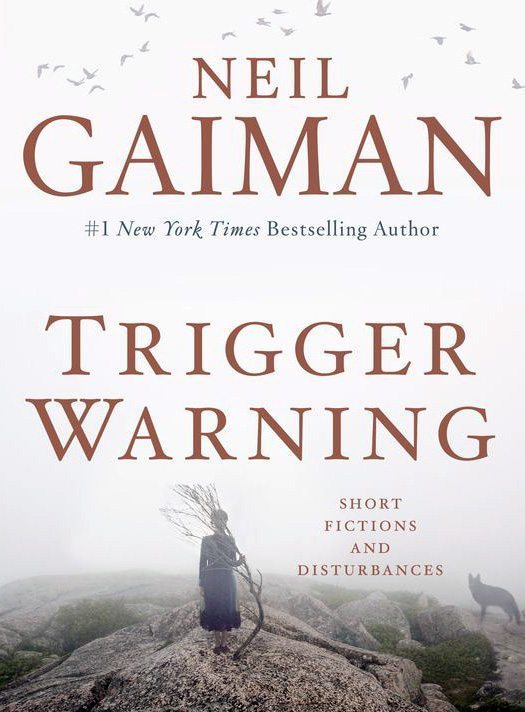
Trigger Warning by Neil Gaiman

When I was in the Detox Unit at the hospital, they taught me about “Triggers.” A “Trigger” is something that brings back the feeling of the old rush that heroin used to give me back in the day and then I am weakened and go see the dealer.

Neil Gaiman’s new book of short stories is called Trigger Warning: Short Fictions And Disturbances. It’s like a trigger that gives the good rush but instead of going out to buy heroin, I want to read another story. His book is that good.

Neil Gaiman says, “We each have our little triggers . . . things that wait for us in the dark corridors of our lives.” As soon as Gaiman said that, I knew exactly what he was talking about and had a desire to read the book immediately.

In this book, Trigger Warning, all of the wonderful places of the imagination are brought to life. Even in the Introduction, also written by Gaiman, I was “triggered” and I couldn’t stop reading. In many books I read a few sentences of the introduction and then jump to the story. In Trigger Warning I couldn’t stop reading his introduction. It was many stories within itself.

There are books of short stories that are like crap shoots. Sometimes you win and sometimes you lose. In Gaiman’s new book of short stories, they are all winners. It was a rush.

You see, my new addiction is reading. There is nothing better than settling down in a comfortable chair or lying on the bed and reading a great book. Trigger Warning is a great book. Neil Gaiman’s talent shines like it did in his graphic novel called The Sandman or his book called American Gods.

When this man sits down to write the story flows and you can tell that the story has been percolating in his mind for quite some time. One of the short stories is called “Black Dog” and it is done so well that, as a writer myself, I could tell that Gaiman must have left it out of American Gods and it wouldn’t let him rest until he let it spill out of the miraculous trap door in his imagination.

Neil Gaiman has been cursed. If he doesn’t let the stories out, they will come to him in his dreams and haunt him, wake him up in the middle of the night and, like a wild beast, chase him to the computer screen or pen and paper until he lets the story out. Imagine being trapped in a body full of moving illustrations that have beginnings and endings and not being able to rest until you let these “trigger warnings” out.

Included in this thrilling group of stories is the novelette called “The Truth is a Cave In The Black Mountains.” This story was also separately published and illustrated by Eddie Campbell and won the Locus Award.

Neil Gaiman originally lived in England and now resides in the United States with his wife Amanda Palmer, who is also a musician and a writer.

You can find Trigger Warning at the Harvard Bookstore, an independent bookstore located in Harvard Square in Cambridge. Neil Gaiman’s stories come from the dark places that live in our minds. When you read them they change your perspective on reality.

Trigger Warning: Short Fictions and Disturbances by Neil Gaiman was released on February 2nd by William Morrow, a division of HarperCollins Publishers, 195 Broadway, New York, NY 10007,